Buying & owning
The handover documents you should insist on: labelled boards, schematics, test reports
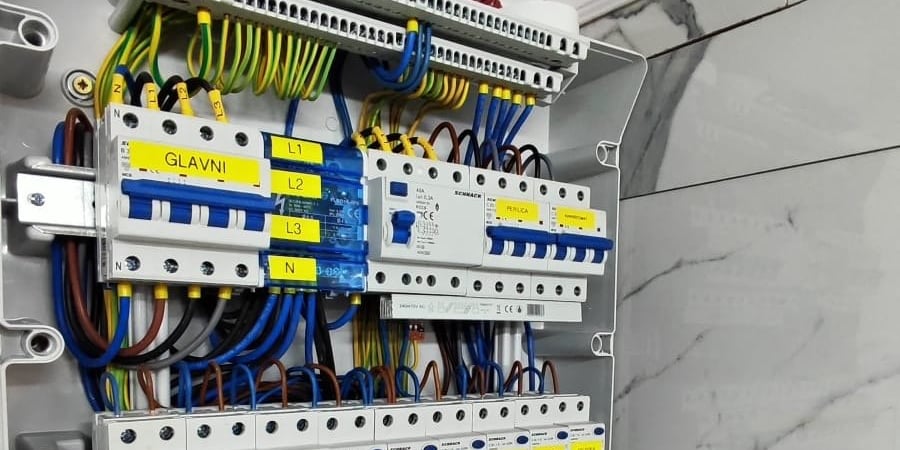
Handover (predaja radova) is the moment the electrician packs up and the installation becomes yours to live with. The work may look finished, but without the right documents nobody can show what was installed, how it was tested or where the cables run, and the next electrician, a buyer or an inspector may ask exactly that.
Here are the electrical handover documents to insist on after work in a flat, a house, a holiday rental or a venue, what Croatian rules require, and how to agree them before work starts. Buying rather than building? Start with what an electrical inspection should check.
Which documents should you get at the handover?
For most jobs, four: a labelled distribution board with a written circuit list, a schematic of the board and the main cable routes, the test report (zapisnik o ispitivanju) with the measured results and, for building works, the contractor’s written statement with a maintenance programme. Add the manuals and settings of any devices fitted.
What each one shows, and why it matters later:
| Document | What it shows | Why it matters |
|---|---|---|
| Labelled distribution board and circuit list | Which circuit breaker or RCD feeds which rooms and appliances | You switch off the right circuit, and faults are found faster |
| Schematic of the board | The protective devices, the RCD groups and the circuits as a drawing | Changes and repairs start from a plan, not from guesswork |
| Record of cable routes | Where cables run in walls, floors and ceilings, as a drawing or dated photos | Safe drilling and easier work later, above all in stone walls |
| Test report (zapisnik o ispitivanju) | The inspection and the measured results, circuit by circuit, with the date | Compulsory for a new installation, and the proof of its state at handover |
| Contractor’s written statement | What was built, the evidence of quality and a maintenance programme | Required for building works under the Building Act |
| Manuals, settings and access | How to test the RCDs, reset devices and run cameras or door systems | You can use and maintain what you paid for |
For building works, the Building Act in force since 1 January 2026 requires the contractor’s written statement on the works performed (pisana izjava o izvedenim radovima), with a qualified electronic signature, and a programme for maintaining the building and its installed equipment. The 2014 rulebook on that statement, which the new Act foresees replacing, adds lists of evidence of conformity and of quality, such as test results, from every contractor involved, so the electrician’s test report belongs with it.
What makes a distribution board properly labelled?
Every circuit breaker and residual current device carries a clear, durable label naming what it feeds in words anyone understands, such as kitchen sockets or bedroom air-conditioning. A written circuit list inside the door repeats the labels, and the labels, the list and the schematic all agree.
A board labelled only with numbers, or with names that no longer match the rooms, is little better than none. A well-labelled distribution board (razvodni ormar) also shows:
- which residual current device (zaštitna strujna sklopka, FID) protects which circuits, so that a trip can be traced to its group;
- the main switch (glavni prekidač), marked so that anyone can find it quickly;
- surge protection (prenaponska zaštita), where it is fitted;
- spare ways, marked as spare;
- the date of the last change, with the circuit list updated to match.
Labelling does not stop at the board: junction boxes (razvodne kutije) can carry labels too, and data cables should be labelled at both ends, at the socket and in the network rack. We label boards, cables and circuits on every job, because it makes maintenance and all future work easier; the power installations section shows the boards we build.
What should a test report contain?
It should record a visual inspection and the measurements made with instruments to the HRN HD 60364-6 standard, circuit by circuit, with the results, the date and who carried out the tests. For a new installation the test is compulsory, and the installation only counts as fit for use once the results comply and the records exist.
The rule comes from the Technical Regulation for Low-Voltage Electrical Installations (Tehnički propis za niskonaponske električne instalacije) of 2010. Its Annex C makes the final inspection and test of every new installation compulsory and requires a record of it: the zapisnik that many people call the atest. Parts that will be concealed must be inspected and tested during the work and noted in the construction log (građevinski dnevnik), and all the records go with the documentation for the building’s technical inspection.
The measurements follow HRN HD 60364-6:2016, the verification standard adopted by the Croatian Standards Institute, and the regulation requires every inspection record to contain the data that standard lists. In a typical report you should find:
- continuity of the protective conductors;
- insulation resistance, circuit by circuit;
- fault-loop impedance;
- a trip test of each residual current device;
- earth resistance.
After each periodic verification the standard also asks for an electrical installation condition report. And a report is not a one-off: the regulation requires an extraordinary inspection after every change, after any extraordinary event that may affect the installation and whenever the inspectorate asks, so each new circuit or board adds a record to the file.
Who may carry out the tests? The regulation sets what is inspected, how often and what the record holds, but names no licence or register for whoever performs periodic inspections or signs the record; during construction, the only roles it names are the contractor (izvođač) and the supervising engineer (nadzorni inženjer). The standard asks for a skilled person competent in verification and leaves the qualifications to national rules. In Croatia, the rulebook on safety at work with electrical energy reserves installation, maintenance and testing work for workers with electrotechnical qualifications, and defines a skilled person (stručna osoba) as a trained electrical-trade worker with the right education, skill and experience.
Who keeps the documents, and for how long?
The owner of the building keeps the inspection and maintenance records, permanently: the regulation says so in as many words. Inspectors may ask to see them, a careful buyer will, and the next electrician needs them. Employers have extra duties under safety-at-work law, fire-protection law asks for maintenance records too, and lightning protection systems have their own.
The same regulation sets the longest gap between regular inspections, unless the design or another regulation sets a different interval:
| Building or part of a building | Longest interval between regular inspections |
|---|---|
| Residential, such as flats and houses | 15 years |
| Buildings of public use | 4 years |
| Electrical installations for safety purposes | 4 years |
| All other buildings, such as shops, offices, restaurants and hotels | 4 years |
Whether a flat let to guests counts as residential or as another building is not settled in any official text we have read; the owner’s side of letting is covered in holiday-rental electrical safety in Croatia. The Building Act adds that the owner maintains the building following the contractor’s maintenance programme.
Three more sets of rules add to the file:
- Workplaces. The Occupational Safety Act counts buildings used for work, with their installations, as means of work, requires employers to have them inspected and tested, and to make the record of testing available to workers: that covers a café, a shop or an office.
- Fire protection. The Fire Protection Act obliges owners, users and building managers to keep electrical installations in working order and to hold documentation of their maintenance.
- Lightning protection. If the building has a lightning protection system, the regulation for lightning protection systems sets inspection intervals by protection level, with tests and measurements every two years at level I and every six years at levels III and IV, and the owner keeps those records permanently too. Storms and surges are covered in surge protection and what to do after a lightning strike.
Keep one paper file and one scanned copy per property, add each record as it arrives, and hand the set to the next owner; if you manage a property in Dubrovnik from abroad, give your property manager access too.
How do you make sure you get them?
Agree the documents before work starts. Name them in your first message, check that the written quote states what the handover includes, and ask for dated photos of the cable routes before the walls are closed. At the handover, go through the board, the labels and the papers together before the job is signed off.
Our jobs run in five steps, set out under how a job runs: the work is carried out with every circuit and cable labelled, and at the handover we explain what was done and how to use it. If you need a test report or drawings for a building file, a buyer or a building manager, say so in your first message, before the work is quoted.
Before you sign off any electrical job, check that:
- the labels on the board match the circuit list, room by room;
- you know where the main switch is and how to use the RCD test button;
- the test report is dated, with results for each circuit and the name of whoever carried out the tests;
- dated photos or a drawing show every cable that is now hidden;
- you have the manuals and the admin access to any cameras or door system, with default passwords changed;
- you hold a digital copy of everything.
Planning work? Describe it on the quote form or send it on WhatsApp. Electro Access works 07:00–16:00, Monday to Friday, and every job is quoted in writing.
Quick answers
Is a test report compulsory for a new electrical installation in Croatia?
Yes. The 2010 technical regulation makes a final inspection and test of every new installation compulsory, carried out with measuring instruments to HRN HD 60364-6, with a record kept. The installation only counts as fit for use once the results comply and the prescribed records exist.
What is an atest for electricity?
It is the everyday name for the record of an inspection and test of an electrical installation, the zapisnik o ispitivanju. The regulation requires one after the final test of a new installation and after every regular or extraordinary inspection, with the data that the HRN HD 60364-6 standard lists.
Do I need a new test after adding sockets or replacing the board?
The regulation requires an extraordinary inspection after every change to the installation, after any extraordinary event that may affect it and whenever the inspectorate asks. Adding circuits or replacing the distribution board is a change, so plan the testing and an updated record as part of the job.
How long should electrical test reports be kept?
Permanently. The regulation obliges the owner of the building to keep the inspection and maintenance documentation for good. Keep the paper file with the property's documents, store a scanned copy, and pass the whole set to the next owner when you sell.
Who may carry out the tests and sign the record?
The regulation names no licence or register for the person who performs periodic inspections. HRN HD 60364-6 asks for a skilled person competent in verification, and Croatian safety-at-work rules require installation, maintenance and testing work to be done by workers with electrotechnical qualifications. Ask who carried out the tests and keep their name with the report.